
Win More Proposals with Deep Research: Introducing Proposal Intelligence Templates

Great proposals aren't written, they're researched. The teams that consistently win know things their competitors don't: what the customer is actually frustrated about, where the incumbent is quietly struggling, what evaluators circled in red on the last proposal they rejected.
That intelligence used to take days of digging. Today we're making it dramatically faster with five new Deep Research templates built specifically for proposal writers.
The Problem with Most Proposals
Proposal teams work under impossible pressure. RFPs drop, deadlines are tight, and there's never enough time for the competitive and customer intelligence work that separates a good proposal from a winning one. So teams fall back on generic value propositions, boilerplate risk sections, and win themes that could have been written for any bid. Evaluators notice.
The new Proposal templates in our agentic Deep Research feature are designed to close that gap.
Five New Templates, One New Category
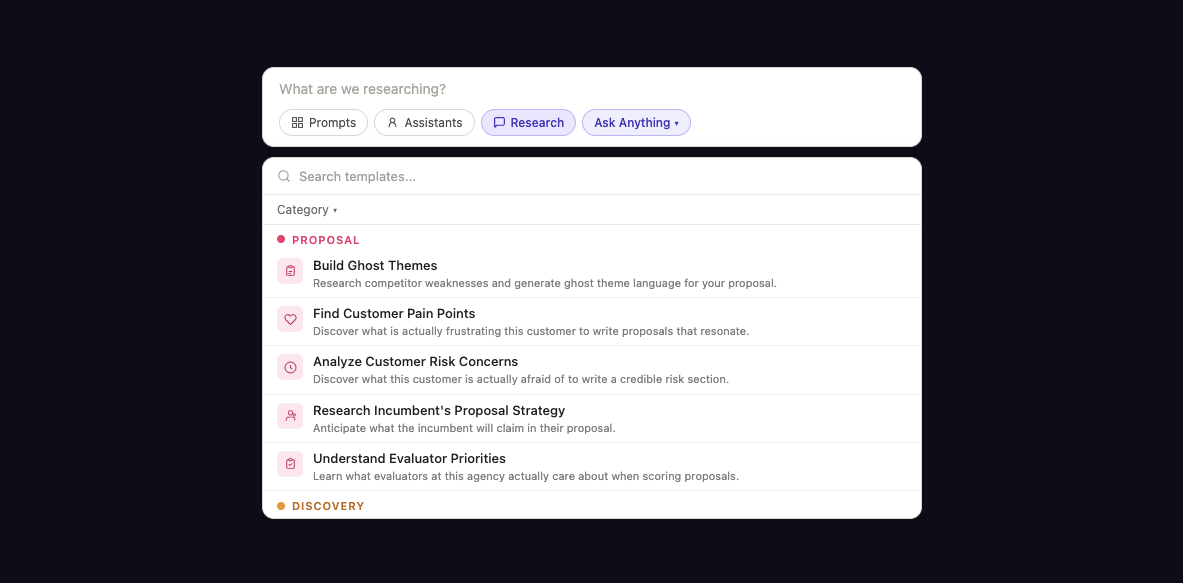
You'll find all five templates under the new Proposal category in the Deep Research dropdown, color-coded pink.
Build Ghost Themes: Researches your named competitors, identifies documented vulnerabilities, and generates ready-to-use language mapped to specific proposal sections. It also identifies what competitors might ghost about you and how to neutralize it.
Find Customer Pain Points: Digs into GAO reports, IG audits, congressional testimony, and budget justifications to surface what's actually frustrating a specific agency, with sourced evidence and messaging recommendations for each finding.
Research Incumbent's Proposal Strategy: Helps you anticipate the incumbent's playbook before they write it: their win themes, proof points, and narrative, plus a counter-positioning strategy built around where they're genuinely vulnerable.
Analyze Customer Risk Concerns: Researches the specific failures and audits that shape how an agency thinks about risk, translating them into proposal language you can use directly in your risk section.
Understand Evaluator Priorities: Researches who evaluates proposals at a specific agency, what they actually prioritize beyond stated criteria, and what consistently gets proposals flagged. It draws on protest decisions and debrief patterns.
How It Works
Open the Deep Research dropdown, click Ask Anything, and select the Proposal category. Fill in your inputs, answer up to three clarifying questions, and the AI kicks off an agentic research run, synthesizing findings into a structured, actionable output.
The Proposal templates are live today. Give them a try on your next bid. Or, see it in action on a demo.
Click here to schedule a demo to get the full scoop on how our product actually works and discover how AI can transform your approach to government contracting.
Explore More Resources
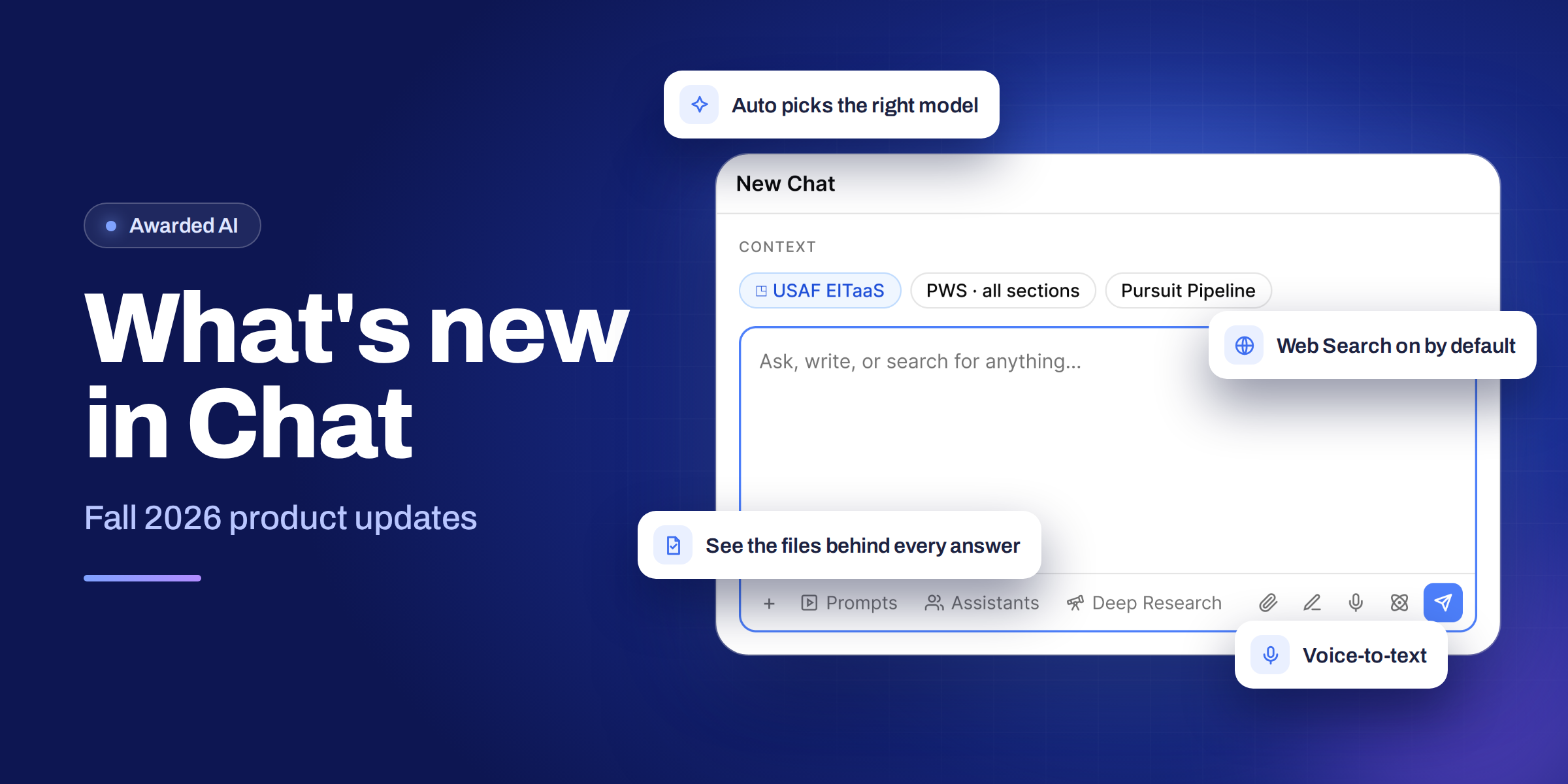
What's New in Awarded AI Chat: Fall 2026 Product Updates
Over the last few weeks, we shipped a steady run of small but mighty improvements to Chat in Awarded AI. Together, they change how it feels to do real capture and proposal work in Chat.
What's New in Awarded AI Chat: Fall 2026 Product Updates
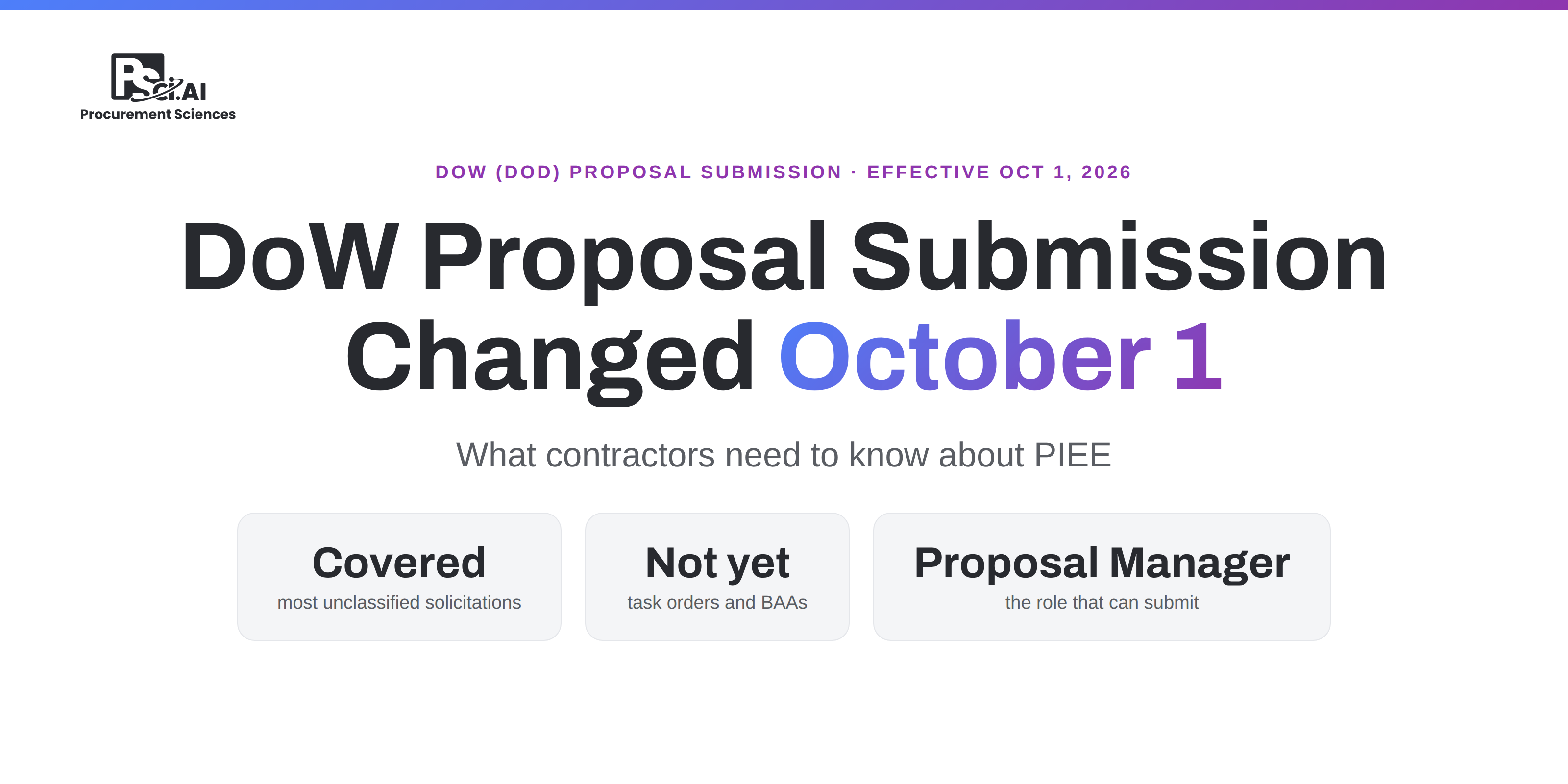
DoW Proposal Submission Changed October 1: What Contractors Need to Know About PIEE
As of October 1, 2026, Department of War (DoW) contracting officers must publish unclassified solicitations and receive offers through the PIEE Solicitation Module, unless an exception applies.
DoW Proposal Submission Changed October 1: What Contractors Need to Know About PIEE
.png)
What Is SEWP VI? A Guide to NASA's Next-Generation IT GWAC
NASA SEWP VI is the sixth generation of one of the federal government's oldest and largest IT acquisition vehicles, a Government-Wide Acquisition Contract (GWAC) that lets any federal agency buy commercial IT, communications, audio/visual, cloud, cybersecurity, and enterprise IT services without running its own competition.
What Is SEWP VI? A Guide to NASA's Next-Generation IT GWAC